
What causes hair loss in women usually traces back to one of six triggers: genetics, a stressful event on the body, childbirth, hormonal conditions, nutritional gaps or styling damage. Most of these have a clear pattern, and many respond well when the cause is identified early and treated directly.
Women noticing a wider parting, a thinner ponytail or more strands on the pillow will find the likely reasons below, along with the early signs worth acting on and the treatments a doctor can tailor to each cause.
Guesswork with shampoos and supplements often costs months. A scalp analysis at Young Clinic pinpoints the likely trigger first, so you can explore hair loss treatments for women with a clear starting point.
How Much Hair Loss Is Normal?
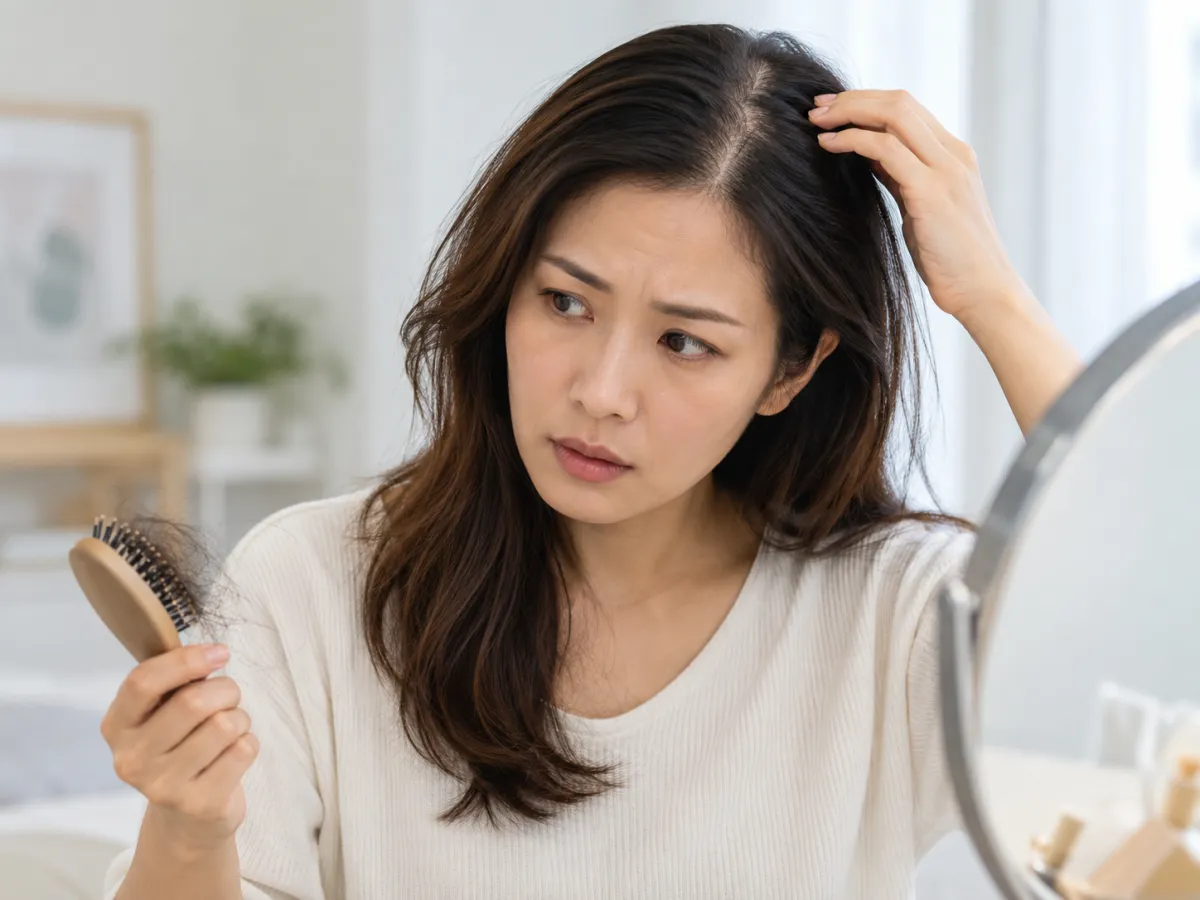
According to the American Academy of Dermatology, losing around 50 to 100 hairs a day is considered normal.
At any given time, about 85% of scalp hairs are in the growth phase while around 15% are in the resting phase, which explains why some strands naturally fall out as new hair grows.
Changes become more noticeable when you are shedding significantly more hair than usual, your hair feels progressively thinner, your parting appears wider, or more of your scalp becomes visible.
These signs may indicate that the hair growth cycle has been disrupted and may warrant a professional assessment.
Young Clinic offers hair loss assessments to help identify your hair and scalp concerns before recommending a suitable treatment approach.
Contact Young Clinic to book an appointment and discuss your concerns with the medical team.
6 Common Triggers: What Causes Hair Loss in Women
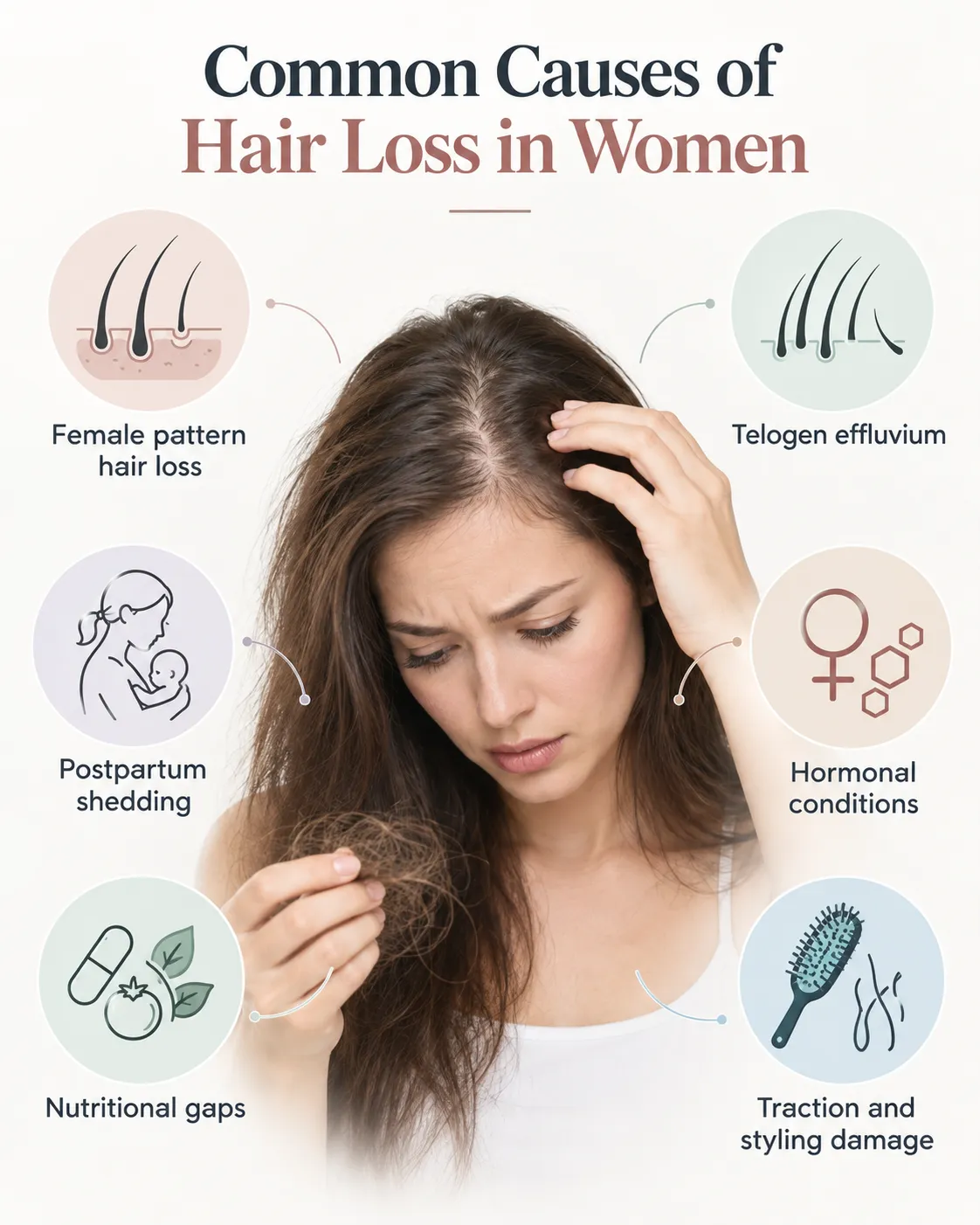
Each cause of hair loss in women leaves a slightly different pattern, which is why a doctor looks at where and how the hair is thinning before recommending treatment.
| Cause | What happens | Typical pattern |
|---|---|---|
| Female pattern hair loss | Follicles gradually shrink and produce finer hair, linked to genetics and hormones | Widening parting, thinner crown, sometimes receding temples |
| Stress-induced hair shedding (also known as Telogen effluvium) | A shock pushes many hairs into the resting phase at once | All-over shedding, usually 1 to 6 months after the trigger |
| Postpartum shedding | Oestrogen falls after delivery and held hairs shed together | Starts around 2 months after birth, peaks near 4 months |
| Hormonal conditions | PCOS, thyroid imbalance or stopping the pill disrupts the hair cycle | Diffuse thinning, sometimes with other body changes |
| Nutritional gaps | Low iron, protein, zinc or biotin starves follicles of building blocks | Gradual all-over thinning and brittle strands |
| Traction and styling damage | Tight hairstyles, heat and chemical treatments stress follicles | Thinning along the hairline or where hair is pulled |
Female pattern hair loss is the most common cause of hair loss in women and often appears in the 40s to 60s, though it can start earlier. It develops slowly, so many women only notice it once the parting has visibly widened.
Stress-related shedding is usually temporary, and hair tends to regain its normal fullness within 6 to 9 months. Traction damage is the one to take most seriously early, because tight hairstyles can lead to permanent hair loss if the habit continues.
6 Early Signs of Hair Loss Women Should Not Ignore
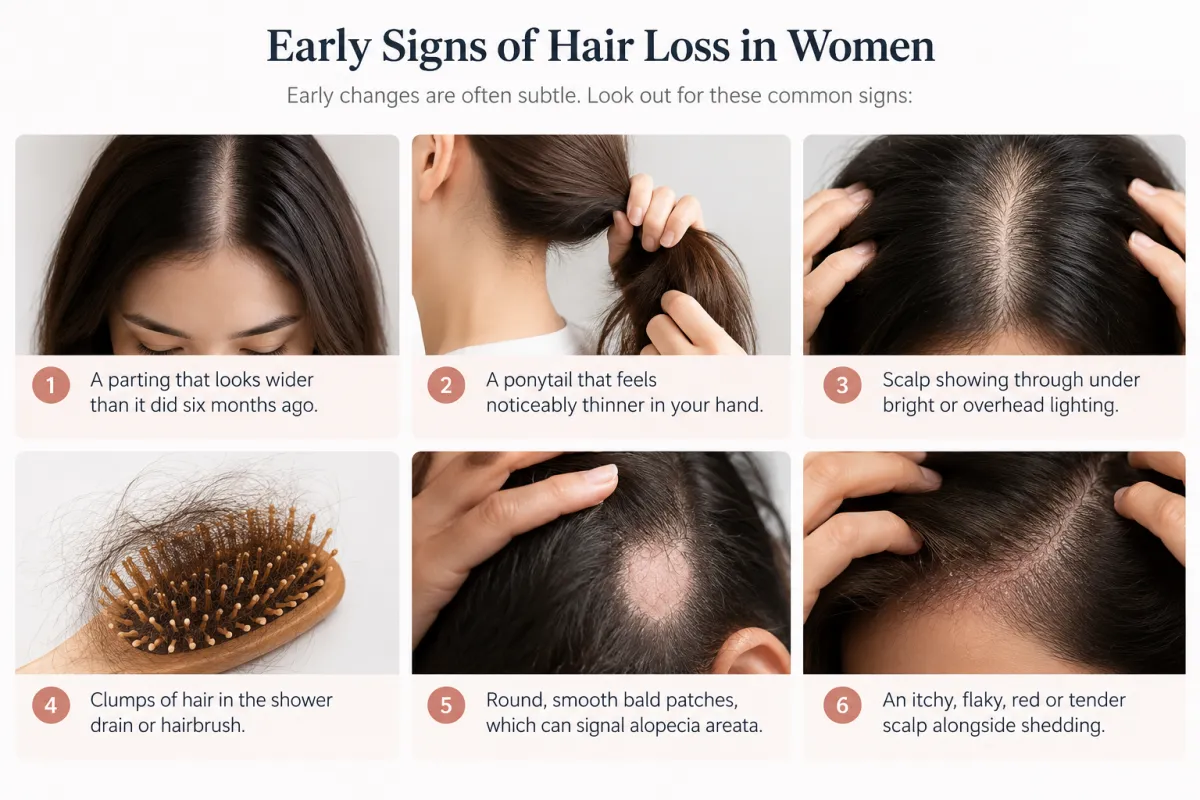
Early changes are subtle, so watch for these signs:
- A parting that looks wider than it did six months ago
- A ponytail that feels noticeably thinner in your hand
- Scalp showing through under bright or overhead lighting
- Clumps of hair in the shower drain or hairbrush
- Round, smooth bald patches, which can signal sudden bald patches (alopecia areata)
- An itchy, flaky, red or tender scalp alongside shedding
Sudden patchy loss, scalp pain or shedding that lasts longer than six months needs a medical review rather than home remedies.
Young Clinic doctors check these signs as part of a structured hair and scalp assessment, which helps separate a temporary shed from a pattern that needs ongoing care.
Hair Loss Treatments for Women Matched to the Cause
Effective hair loss treatment for women starts with the cause, because a nutritional gap and a genetic pattern need very different plans.
The table below shows how common treatment routes line up with each concern.
| Treatment route | How it works | Often considered for | Key consideration |
|---|---|---|---|
| Correcting the trigger | Blood tests and medical review address iron, thyroid or hormone issues | Telogen effluvium, hormonal and nutritional causes | Hair recovers gradually once levels settle |
| Doctor-prescribed medication | Topical or oral medicines slow thinning and support regrowth | Female pattern hair loss | Needs 6 to 12 months of consistent use to judge |
| Platelet-rich plasma (PRP) | Concentrated platelets from your own blood are applied to the scalp | Thinning linked to weakened follicles | Suitability confirmed through assessment |
| Hair Filler and growth factors | Scalp treatments deliver hydration, peptides and growth signals to follicles | Reduced density and dull scalp health | Usually planned as a course with review points |
| Hair supplementation | Targeted vitamins and nutrients support the hair from within | Diet-related thinning and maintenance | Works best alongside in-clinic care |
The AAD states that minoxidil and prescription options take 6 to 12 months to show whether they are working, and that treatment works best when started at the first sign of thinning.
PRP and stem-cell approaches are described as promising but still under research, so ask your doctor for realistic expectations before starting a course.
Book a hair loss assessment with Young Clinic to discuss which treatment suits your type of hair loss, or view the KLCC clinic to plan your visit.
Hair Loss Treatment for Women at Young Clinic
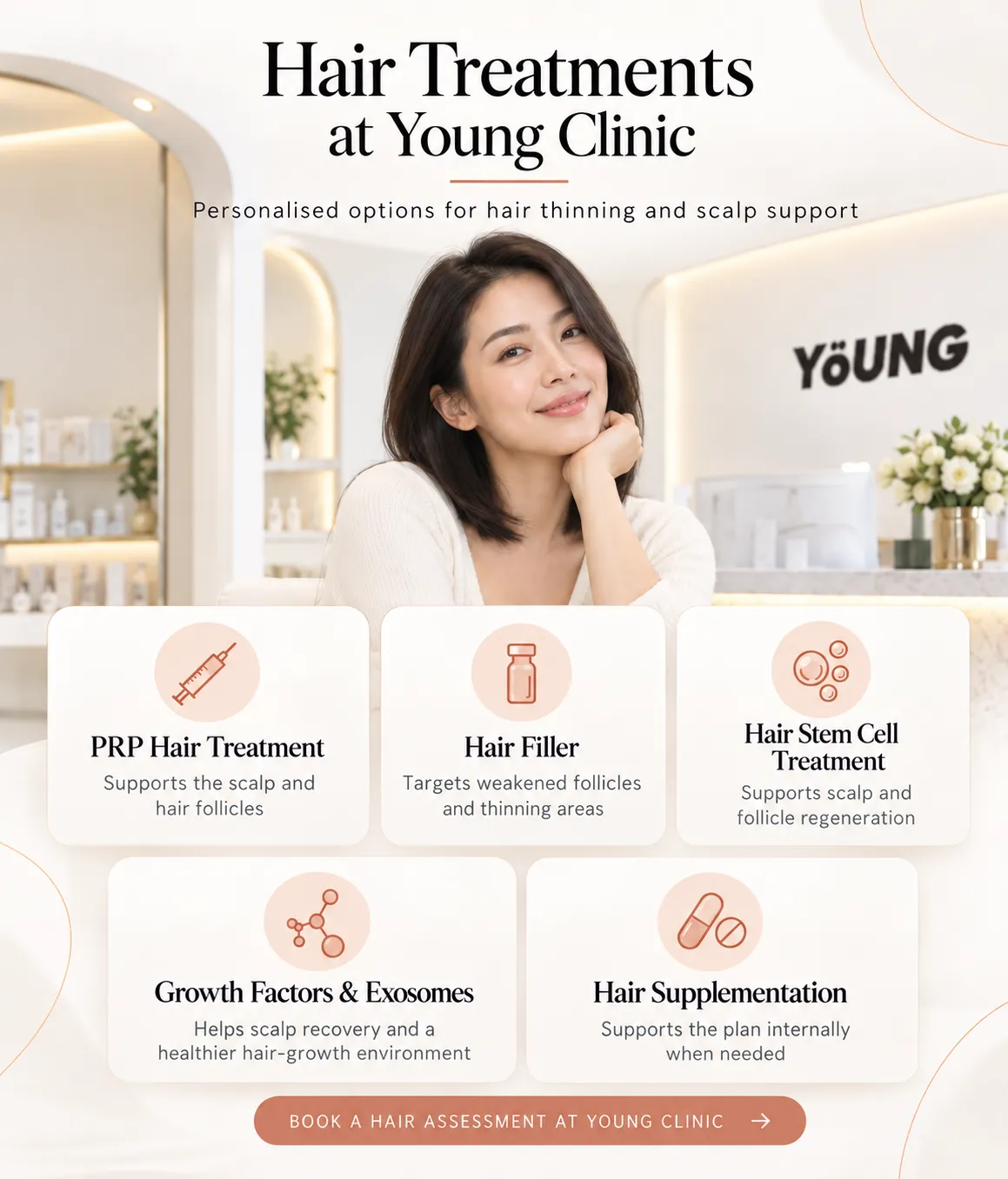
Young Clinic provides a structured approach that combines assessment, targeted in-clinic treatments and ongoing progress reviews.
Patients visiting the aesthetic clinic in Kuala Lumpur can begin with a scalp and hair assessment before a doctor recommends a treatment plan based on the pattern and severity of hair loss.
1. Identify What May Be Causing the Hair Loss
Young Clinic first assesses your scalp condition, hair density, shedding pattern, medical history and lifestyle factors. This helps the doctor determine which treatment options may be more suitable rather than using the same approach for every patient.
2. Match the Treatment to Your Hair Concern
Depending on the assessment, Young Clinic may recommend one or a combination of these hair growth treatment in Malaysia options:
- PRP Hair Treatment: uses platelet-rich plasma derived from your own blood to support the scalp and hair follicles.
- Hair Filler: delivers specialised ingredients into targeted areas of the scalp to support weakened follicles and thinning areas.
- Hair Stem Cell Treatment: focuses on supporting scalp and follicle regeneration as part of a personalised hair restoration plan.
- Growth Factors and Exosomes: may be recommended to support scalp recovery and create a healthier environment for hair growth.
- Hair Supplementation: supports the treatment plan internally when nutritional or lifestyle factors may be contributing to hair thinning.
3. Combine Treatments When Needed
Young Clinic can combine suitable in-clinic procedures with supplementation and scalp care according to your hair loss pattern, treatment goals and response.
4. Review Your Hair Growth Progress
Hair growth takes time, so progress is reviewed throughout the treatment plan.
Young Clinic’s medical team can monitor changes in shedding, hair density and scalp condition before adjusting the treatment approach where needed.
Young Clinic’s hair treatments are overseen by its medical team, led by Dr Sylvia Wai, Clinical Director, and Dr Alicia Quah, Medical Director, with treatments available at KLCC.
Book a Hair Loss Assessment Before Starting Treatment
Hair loss can have different causes, so the right treatment starts with finding out what may be affecting your scalp and hair growth.
Young Clinic combines a scalp analysis and doctor consultation to assess your shedding pattern, scalp condition and hair concerns before recommending suitable options such as PRP, Hair Filler, Growth Factors/Exosomes or tailored supplementation.
Book your hair loss consultation at Young Clinic today and let the medical team recommend the next step for your hair and scalp.
Frequently Asked Questions About Causes of Hair Loss in Women
Can hair loss in women grow back?
Hair lost to stress, childbirth or nutritional gaps often regrows once the trigger settles, and a Young Clinic scalp analysis helps confirm which type you have before treatment begins.
What is the most common cause of hair loss in women?
Female pattern hair loss is the most common cause, and doctors check the parting and crown pattern during consultation to confirm it.
Is PRP suitable for female hair loss?
PRP may be considered for thinning linked to weakened follicles, with Young Clinic confirming suitability through scalp analysis and medical history first.
Can vitamins alone stop hair loss?
Supplements help mainly when a deficiency is part of the cause, which is why Young Clinic tailors its Hair Supplementation programme after assessment.
How long does hair loss treatment take to show results?
Prescription treatments usually need 6 to 12 months of consistent use to judge results, while in-clinic courses are reviewed at set points in your plan.
Where can I get hair loss treatment for women in Kuala Lumpur?
Young Clinic offers hair loss assessments and treatments at its KLCC clinic, bookable through the Hair Treatments page.